
Rezilient on Bloomberg: AI and Hybrid Care Transforming Healthcare Access
June 1, 2026
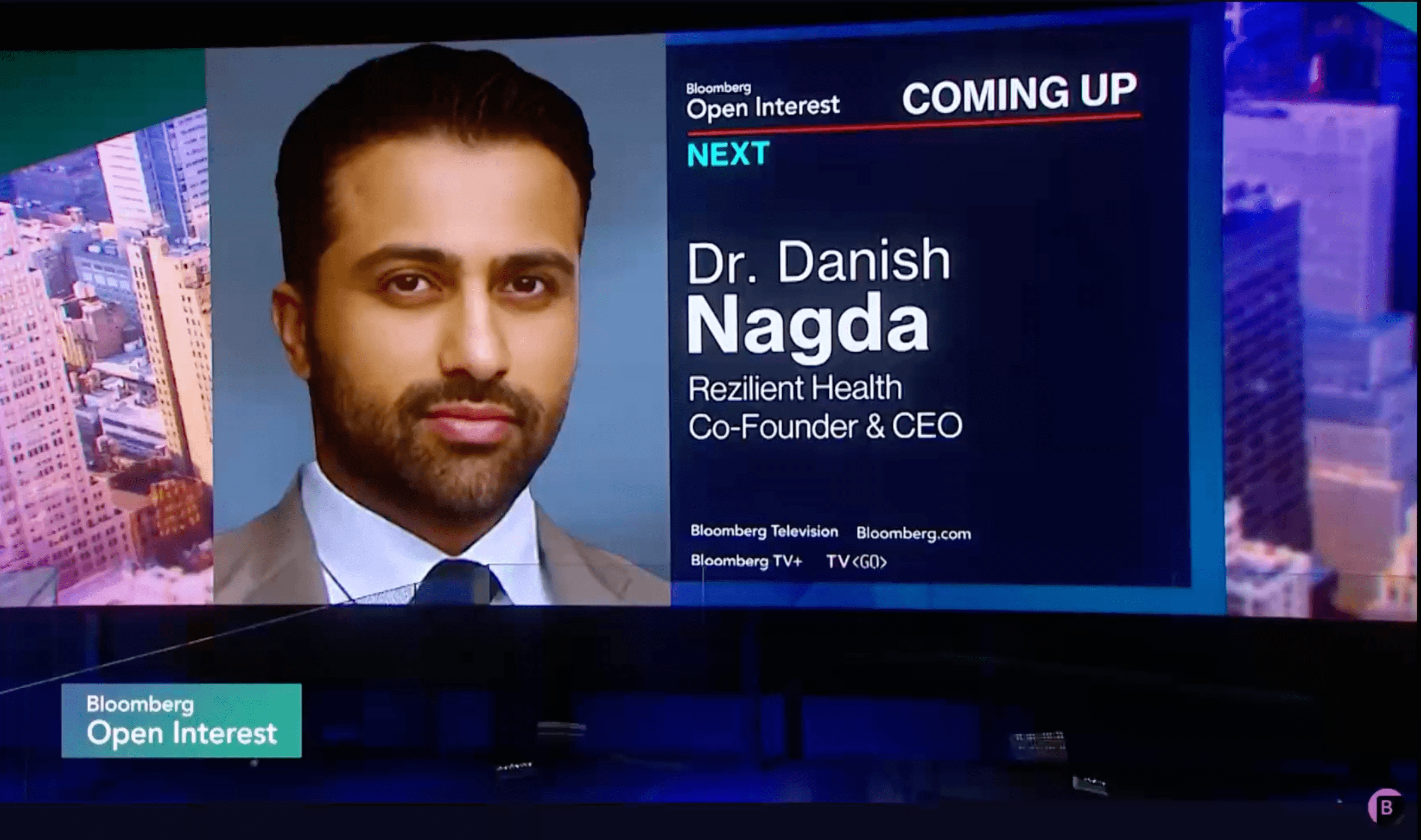
Healthcare access has become one of the industry’s most urgent challenges. Patients are waiting weeks or months for appointments, primary care shortages continue to grow, and healthcare costs keep rising. At the same time, many people are delaying care altogether because the system feels too difficult to navigate.
These challenges were at the center of a recent conversation between Rezilient Health Founder and CEO, Dr. Danish Nagda, and Bloomberg Open Interest. During the interview, Danish shared his perspective on why healthcare is reaching a critical inflection point and how AI in healthcare, hybrid care delivery models, and employer-sponsored healthcare could help reshape the future of healthcare access.
Watch the Full Bloomberg Interview
In case you missed it, Danish recently joined Bloomberg Open Interest to discuss healthcare access, AI, employer-sponsored care, and the future of healthcare delivery.
Healthcare Access Crisis: A System-Wide Challenge
One of the key themes throughout the discussion was that access is no longer simply a patient satisfaction issue. It has become a system-wide challenge affecting costs, outcomes, employers, providers, and patients alike.
“We’re at a real tipping point here in healthcare,” said Danish.
As provider shortages continue and demand for care increases, many patients are finding it harder to establish ongoing relationships with primary care providers. In some cases, people are delaying care until a problem becomes urgent. In others, they are leaving the healthcare system altogether.
“People are just opting out of the healthcare system,” Danish noted.
When patients cannot easily access care, the consequences extend far beyond delayed appointments. Preventive care gets postponed, chronic conditions go unmanaged, and healthcare costs increase as more issues are treated in higher-cost settings.
How Employer-Sponsored Healthcare Can Reduce Costs and Improve Outcomes
For employers, healthcare access directly impacts workforce health, productivity, and healthcare spending.
As healthcare costs continue to rise, organizations are looking for ways to improve outcomes while making care easier for employees to use. During the Bloomberg interview, Danish highlighted the growing role employers can play in expanding access to primary care and preventive services.
Primary care remains one of the most effective investments organizations can make in employee health.
“When you spend a dollar on primary care, you can save three to five dollars in the same year,” said Danish.
By helping employees access care earlier, employers can reduce downstream healthcare costs while supporting a healthier, more engaged workforce.
Hybrid Care Models Are Closing the Gap in Healthcare Access
The conversation also explored the role of Rezilient’s CloudClinic model in addressing access challenges.
Traditional healthcare often forces patients to choose between convenience and comprehensive care. Virtual care offers accessibility, while brick-and-mortar clinics provide hands-on support and diagnostics.
CloudClinics are designed to bring those experiences together.
By combining in-person medical support with virtual primary care and provider access and connected diagnostic technology, the model helps expand provider capacity without sacrificing quality or patient experience.
For patients, this means shorter wait times and more convenient access to care. For employers, it creates an opportunity to provide healthcare benefits that employees are more likely to use.

How AI in Healthcare Is Expanding Access Without Replacing Providers
Artificial intelligence was a major focus of the Bloomberg discussion, but Danish emphasized that AI should be viewed as an enabler rather than a replacement for clinicians.
Patients are already turning to AI tools for health information everyday. The challenge is ensuring those interactions are connected to trusted clinical expertise and real care pathways.
Rather than replacing providers, AI has the potential to reduce administrative burden, improve care coordination, streamline documentation, and help patients navigate the healthcare system more effectively.
As healthcare organizations look to the future, the most impactful applications of AI may not be replacing human expertise but helping extend it.
“AI plus healthcare together [is] solving the problem,” said Danish.
Continuity of Care: The Future of Patient-Provider Relationships
Another important point raised during the conversation was continuity of care.
Many patients experience frequent provider turnover due to insurance changes, relocations, or healthcare system fragmentation. These disruptions can make it difficult to build trust and maintain comprehensive health histories over time.
Technology creates an opportunity to rethink that model by helping patients maintain more consistent relationships with their care teams regardless of where they live or work.
As Danish described the vision for the future, patients should be able to maintain a continuous relationship with their healthcare providers without starting over every time life circumstances change.
“You never have to change doctors again.”
Key Takeaways
Healthcare’s challenges cannot be solved through a single technology, care model, or policy change. But the discussion highlighted several important opportunities for healthcare leaders:

As healthcare continues to evolve, one thing is becoming increasingly clear: improving access is not just a healthcare challenge. It is one of the industry’s greatest opportunities.
One Connected Front Door to Care
Rezilient Health combines in-person care at local CloudClinics, virtual care, and coordinated care navigation into a single hybrid model — replacing a stack of disconnected point solutions. See how we partner with self-funded employers.